Digital Product Monetization
Pricing strategies and revenue models for digital product creators.
Products priced $200+ capture 65.7% of total Gumroad revenue — with only 2.4% of listings. Pricing strategy is the #1 lever.
Articles
11 Free Traffic Sources for Digital Products (2026 Ranked)
Paid ads rarely pay back on a low-priced product at launch. We ranked 11 free traffic sources by speed, compounding power and buyer intent.
Gumroad Price Elasticity 2026: Do Higher Prices Sell Fewer Units?
Does a higher Gumroad price cost you sales? Why cross-product price comparisons mislead, the selection effect, and how to run a clean price test.
How Many Products Should You Sell on Gumroad in 2026?
How many products to sell on Gumroad in 2026: why 2-3 related products is a practical target, when to add a second, and when to stop and polish.
Gumroad First Product Pricing: The Case for $49+ (2026)
Why a first Gumroad product often deserves $49+ rather than $15-29: fee math, price anchoring, a worked launch scenario and when a lower price fits.
 Digital Product Monetization
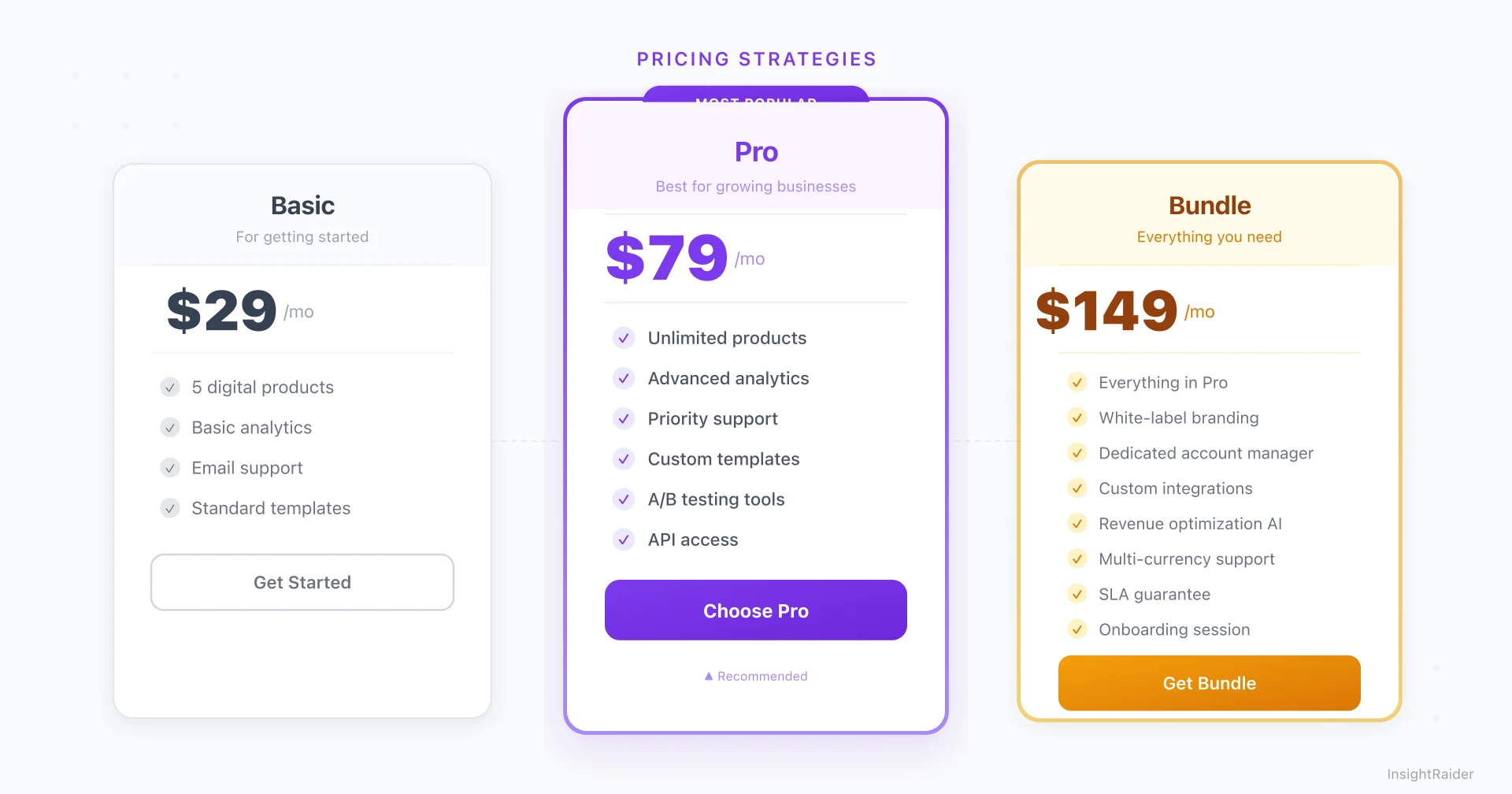
Digital Product Pricing 2026: 7 Strategies You Can Test
Anchoring, tiers, PWYW, launch pricing, bundles, subscriptions and PPP: 7 digital product pricing strategies and how to test each one with your own buyers.
 Digital Product Monetization
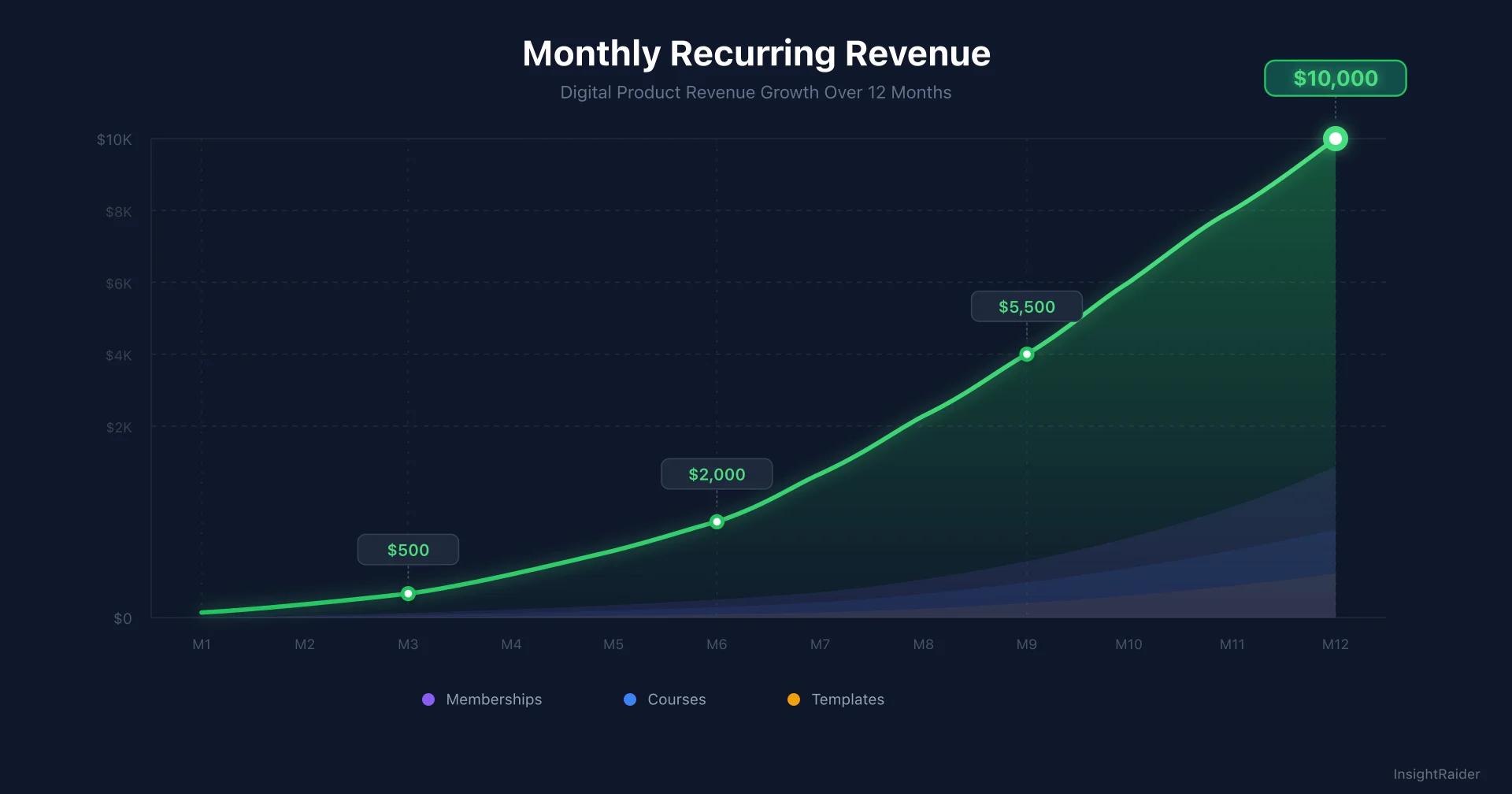
Recurring Revenue with Digital Products: 5 Models Compared
Stop relying on one-time sales. Learn how to build predictable monthly income with membership sites, subscriptions, and community-based digital products.
Connect a revenue decision to the promise you deliver
Use this collection when you already have an offer and need to decide what to change about its price, packaging, or revenue model. Start with your own transactions and customer commitments, then use market evidence for context. A higher listed price does not automatically create a better business, and recurring billing creates work as well as recurring income. The guides below address different decisions. Choose the one that matches your current constraint so you can make a focused change and evaluate its consequences.
Choose a monetization question before choosing a tactic
- Review the price and value proposition
Start here when buyers understand the product but you are unsure how to set or revise its price. Compare the included outcome, support, license, and alternatives before looking at price alone. Use the strategies as candidates for a test with your audience, rather than treating a broad market price band as a prescription.
- Assess whether ongoing value supports a subscription
Read this when customers have a repeated need that your offer could serve. Write down what changes or is delivered each billing period and the work required to maintain it. A subscription decision should include customer access, cancellation, support, and the reason to renew, not just a forecast of monthly payments.
- Examine whether another product helps the same buyers
Use the catalog analysis when you are choosing between improving a current offer and adding another. Look for a distinct next task your buyers need to complete. Treat observed catalog patterns as context, then check your own maintenance capacity and customer requests before deciding how many products you should operate.
Prepare a decision sheet before changing the offer
Start with a baseline for a defined period: qualified visits, orders, gross sales, refunds, transaction costs, and support work. Separate one-time purchases from subscriptions and existing customers from new buyers when the distinction affects your question. Do not compare a launch promotion with an ordinary week without noting the different traffic and buying conditions.
Next, write the reason for the proposed change. A higher price might fund a more complete deliverable; a separate tier might distinguish personal and team use; a bundle might help buyers finish a related sequence of tasks. Specify exactly what each buyer receives. Adding unclear tiers or unrelated bonuses can make the decision harder without improving the underlying outcome.
Then decide what you will observe and for how long. Review revenue after direct costs alongside conversion, refunds, usage feedback, and support demands. If volume is low, avoid reading a handful of orders as a reliable trend. Record other changes that occurred during the period, including traffic source or promotion, so you do not attribute everything to the price.
Keep discount and bundle orders distinguishable in your notes. A buyer who used a launch coupon did not face the same price as someone purchasing later at the standard rate. For a bundle, list the included deliverables and the additional support they create. This lets you compare what buyers actually paid and received instead of relying on the headline price displayed on the sales page during your review.
Illustrative example: a bundle versus a price increase
Imagine a creator selling a $40 document template with 20 orders in a sample month. That is $800 in gross sales before costs. At $50, 16 orders would also produce $800. This arithmetic identifies a question to monitor; it does not predict how buyers would respond to the change or account for differences in support and refunds.
Now suppose customers repeatedly ask for instructions to adapt the template to a team. A team edition with a clear license and onboarding guide may answer that request better than raising the price of the same file for everyone. Compare the extra work with the problem it solves, then test a clearly described offer. These prices and order counts are invented solely to illustrate the decision.
Questions about using these guides
- Should I match a competitor's price?
- Check whether the offers serve the same buyer and include comparable access, support, updates, and usage rights. A similar storefront price can hide a different product or business model. Use the comparison to understand buyer alternatives, then choose a price you can justify through your own offer and test with your actual audience.
- When is recurring billing a poor fit?
- Question it when the buyer's task ends after one deliverable and you cannot identify useful ongoing work. Repeated billing needs a clear continuing promise. Before changing the model, ask what customers would receive after the first period and why it would still matter. A one-time product with an optional service can remain a valid design to investigate.
More questions about this topic
- →How Much Does Gumroad Cost Per Month in 2026?
- →Is Gumroad Free to Use in 2026?
- →Can You Set Your Own Prices on Gumroad in 2026?
- →Does Gumroad Let You Offer Pay What You Want in 2026?
- →How to Sell Subscription Products on Gumroad in 2026?
- →Is Gumroad Worth It for $5–$10 Products? 2026 Fee Math?
- →When does Gumroad pay out in 2026?
- →Does Gumroad Pay via PayPal? 2 Flows Explained for 2026?
- →Gumroad Minimum Payout 2026: The $100 Standard Threshold?
- →Does Gumroad Handle Taxes for Sellers in 2026?